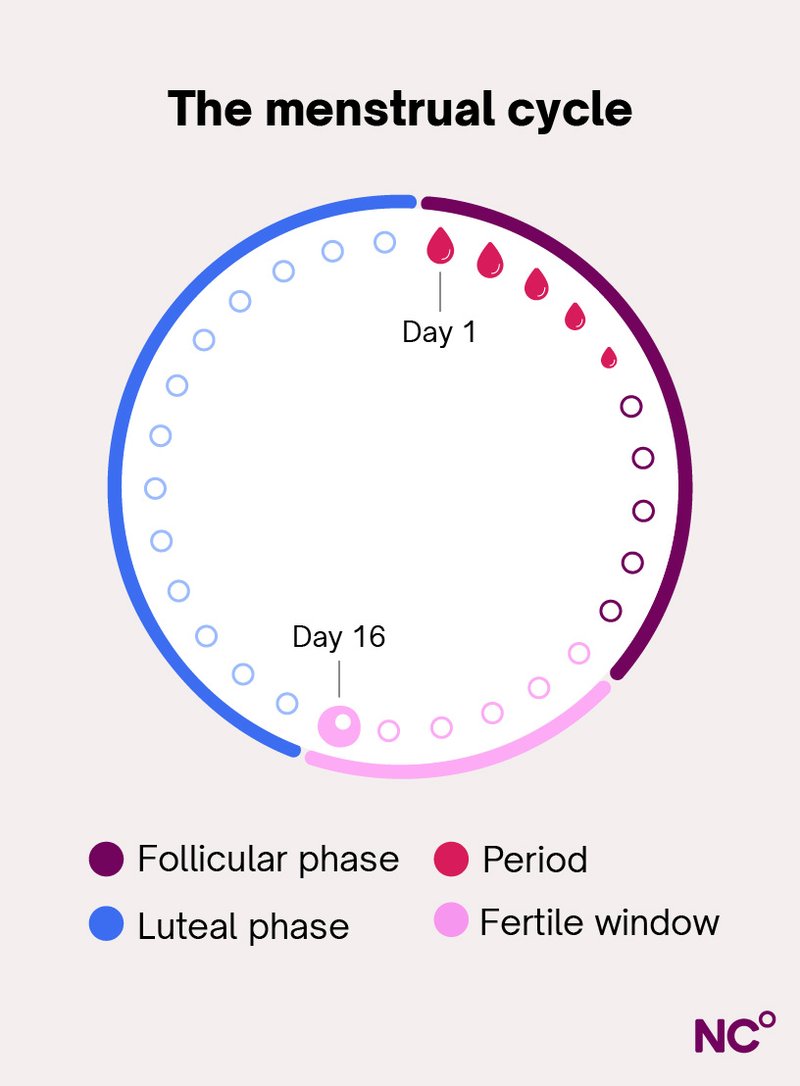
About 40% of women feel mittelschmerz — that sharp, one-sided pelvic pain during ovulation. I'd read this statistic approximately 47 times before I actually felt it myself. And when I did, I genuinely thought something was wrong.
It was a Wednesday afternoon. I was grading papers at my desk, hunched over in that terrible posture teachers develop after year three, when I felt this sudden stab on my right side. Not a cramp. Not an ache. A stab. Like someone poked me with a knitting needle.
I sat up straight, held my breath, and waited for it to pass. It didn't. It lasted about 20 minutes, fading in and out, always on the right side, always in the same spot. I Googled "appendicitis symptoms" at 3 PM on a school computer. Not my finest moment.
What It Actually Feels Like
Mittelschmerz — German for "middle pain," which is hilariously literal — isn't like period cramps. Period cramps are diffuse, wrapping around your lower abdomen like a dull hug from someone who doesn't know their own strength. Mittelschmerz is localized. Precise. Mine is always on the right, always mid-cycle, always lasting 5-30 minutes.
The first few times, I timed it. 8:23 PM start, 8:47 PM end. Right side, lower abdomen, about two inches in from my hip bone. I marked it in my tracker as "ovulation pain?" with a question mark because I wasn't sure. After three cycles of the same pattern, I stopped using the question mark.
It's not debilitating. I don't need painkillers. But it's unmistakable once you know what it is. Like a little notification from your body: "Egg released. Side: right. Time: now."
The Science (Sort Of)
Doctors aren't entirely sure why mittelschmerz happens. The leading theory is that it's related to the follicle rupturing — the moment the egg breaks through the ovarian wall. Fluid and blood from the ruptured follicle might irritate the abdominal lining, causing pain.
Another theory involves the fallopian tube contracting to move the egg toward the uterus. I don't know which theory is right. I don't think anyone does. What I know is that it happens, it's consistent, and it's actually kind of useful for confirming ovulation timing.
Why I Track It
Mittelschmerz is my most reliable ovulation signal. More reliable than BBT (which confirms ovulation after it happens). More reliable than mucus (which predicts it 1-2 days before). Mittelschmerz tells me the exact day, sometimes the exact hour.
I log it in our Symptom Checker Log daily symptoms and spot patterns across your cycle. All data stays in your browser — we never see it. now — "ovulation pain, right side, 20 min" — and it shows up on my chart as a clear marker. Combined with my temperature shift the next morning, I know my ovulation day within about 6 hours.
Not everyone feels it. If you don't, that doesn't mean you're not ovulating. But if you do? Pay attention. Your body is literally telling you what's happening.