Why My Ovulation Tracker Was Useless During Phoenix's Record Heat Wave
Dr. Sarah Mitchell
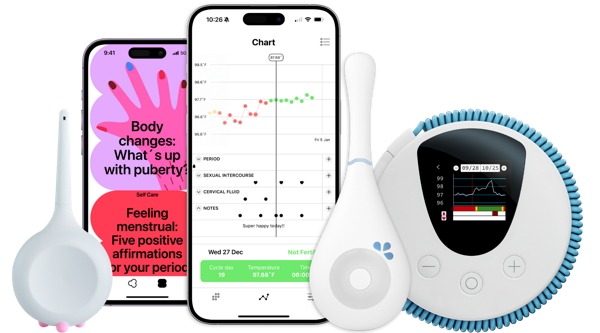
I was staring at my ovulation tracker app on a Tuesday morning in July, trying to make sense of the data. My basal body temperature, which normally rises predictably after ovulation, had been all over the map for three weeks. High. Low. High again. No clear pattern. No thermal shift. No confirmation that I had ovulated at all. The app, which uses an algorithm based on data from thousands of women in climate-controlled environments, was confused. It kept shifting my predicted ovulation date. First it was day 14. Then day 18. Then day 22. Then it gave up and said "insufficient data." I wanted to throw my phone across the room. Not because the app was broken. But because my body was responding to a 118-degree heat wave in ways that the app's developers had never anticipated. Because ovulation tracking in Phoenix in July is not the same as ovulation tracking in San Francisco. And the algorithms don't know that.
I've been an OB-GYN in Phoenix for twelve years. I've helped thousands of women track their cycles. I've recommended apps. I've interpreted charts. I've diagnosed anovulatory cycles and polycystic ovary syndrome and thyroid disorders. And I've never seen so many confused charts as I have this summer. The heat is disrupting women's cycles. Not dramatically. Not dangerously. But measurably. And the apps, which assume a stable environment, are not accounting for it. They're giving women false predictions. False confidence. False alarms. And in some cases, they're contributing to the stress that makes the cycles even more irregular. It's a feedback loop of heat, confusion, and anxiety. And it's happening in my exam room every day.
Here's what extreme heat does to the menstrual cycle that the apps don't tell you. The hypothalamus, which regulates both body temperature and reproductive hormones, is sensitive to heat stress. When the ambient temperature is consistently high, the hypothalamus prioritizes thermoregulation over reproduction. It can suppress the luteinizing hormone surge that triggers ovulation. It can shorten the luteal phase. It can delay follicular development. These effects are subtle. They're not enough to cause infertility in most women. But they're enough to shift ovulation by a few days. To make the basal body temperature pattern irregular. To confuse the algorithms that depend on predictable patterns. And when the algorithm is confused, the woman is confused. And when the woman is confused, she stresses. And stress further disrupts the cycle. It's a perfect storm.
I started seeing patients with heat-related cycle disruptions in May. By July, it was an epidemic. Women who had regular 28-day cycles were coming in with 35-day cycles. Women who always ovulated on day 14 were ovulating on day 20. Or not at all. Their apps were giving them incorrect fertile windows. Some were missing their window entirely. Others were timing intercourse for days when they had already ovulated. The apps didn't know. The apps couldn't know. Because the apps were built on data from women in temperate climates. Women who didn't have to deal with 110-degree temperatures for weeks at a time. Women whose hypothalami were not in survival mode.
The basal body temperature issue is the most obvious. BBT tracking depends on measuring your temperature first thing in the morning, before you get out of bed. The theory is that progesterone, which rises after ovulation, causes a slight increase in body temperature. Usually 0.4 to 1.0 degrees Fahrenheit. But in a heat wave, your body temperature is already elevated from the ambient heat. Your BBT might be 98.0 degrees instead of 97.6. Then 98.2. Then 97.9. The thermal shift that the app is looking for gets lost in the noise. The app sees a temperature of 98.2 on day 16 and thinks "ovulation confirmed." But the temperature might just be from the heat. The woman might not have ovulated at all. Or she might have ovulated on day 12, and the heat is masking the shift. The app can't tell. And the woman, who is trying to conceive or avoid pregnancy, is making decisions based on garbage data.
I started recommending that my patients stop using BBT during heat waves. Just stop. It's not worth the confusion. Use ovulation predictor kits instead. They measure luteinizing hormone in urine. They're less affected by ambient temperature. They're more reliable in extreme heat. But they're expensive. And they're not as "natural" as BBT. And some women prefer the ritual of temperature tracking. The daily check-in. The connection to their bodies. I understand that. But I also understand that bad data is worse than no data. And BBT in 118-degree heat is bad data. It's like trying to measure a whisper in a thunderstorm. The signal is there. But the noise is overwhelming.
The stress component is real. Heat stress is stress. When you're uncomfortable all the time, when you can't sleep, when you're dehydrated, when your body is working overtime to stay cool, your cortisol levels rise. Cortisol suppresses reproductive hormones. It can delay ovulation. It can shorten the luteal phase. It can reduce progesterone production. And the apps don't measure cortisol. They don't measure stress. They don't measure sleep quality. They don't measure hydration. They measure temperature and cycle length. And they assume that those two variables tell the whole story. They don't. In a heat wave, the story is much more complicated. And the apps are reading the wrong book.
I had a patient last month who was trying to conceive. She had been using an app for six months. The app had correctly predicted her ovulation every cycle. Until July. In July, the app predicted ovulation on day 14. She timed intercourse. She waited. She tested. Negative. The app shifted the prediction to day 18. She timed intercourse again. Negative. She came to me in tears. "What's wrong with me?" she asked. I looked at her chart. I looked at the temperature data. I looked at the Phoenix weather for July. I told her: "Nothing is wrong with you. Your body is responding to the heat. Your hypothalamus is doing its job. It's keeping you alive. And it's putting reproduction on hold until the stress passes." She stared at me. "So I'm not broken?" she asked. "You're not broken," I said. "You're hot. And the app doesn't know what to do with that."
I started telling my patients to track their cycles with a notebook. Old school. Pen and paper. Not because apps are bad. But because apps are limited. They can't account for heat. They can't account for stress. They can't account for the individual variability that makes each woman's cycle unique. A notebook lets you add context. "Day 14: BBT 98.2. Heat wave. 112 degrees. Slept poorly." "Day 18: BBT 97.8. Heat broke. Slept well." That context matters. It helps you see the patterns that the algorithm misses. It helps you understand your body. And it helps you make decisions based on reality, not on a digital guess.
The fertility industry is not addressing this. The app companies are not updating their algorithms for climate change. They're not adding heat-adjustment factors. They're not warning users in Phoenix that their predictions might be off. They're just selling the same product to everyone, everywhere, regardless of the environment. And women are paying the price. In missed ovulations. In mistimed intercourse. In unnecessary anxiety. In the feeling that their bodies are broken when they're actually just adapting to a hostile climate. The apps need to evolve. They need to acknowledge that context matters. That temperature matters. That climate matters. And they need to stop pretending that a woman in Phoenix is the same as a woman in Portland. Because she's not. And her cycle isn't either.
So here's my advice. If you're tracking your cycle in a heat wave, stop trusting the app. Use ovulation predictor kits. Keep a notebook. Add context. Adjust your expectations. And remember that your body is smart. It's prioritizing survival over reproduction. And that's not a failure. That's biology. The heat will break. Your cycle will regulate. And when it does, you can go back to the app. But until then, trust your body more than your phone. Because your body knows what it's doing. And the app is just guessing.
Anyone else had their ovulation tracker go haywire in the heat? Because I'm starting to think we need a climate-adjusted fertility app. And I'm willing to help design it.
