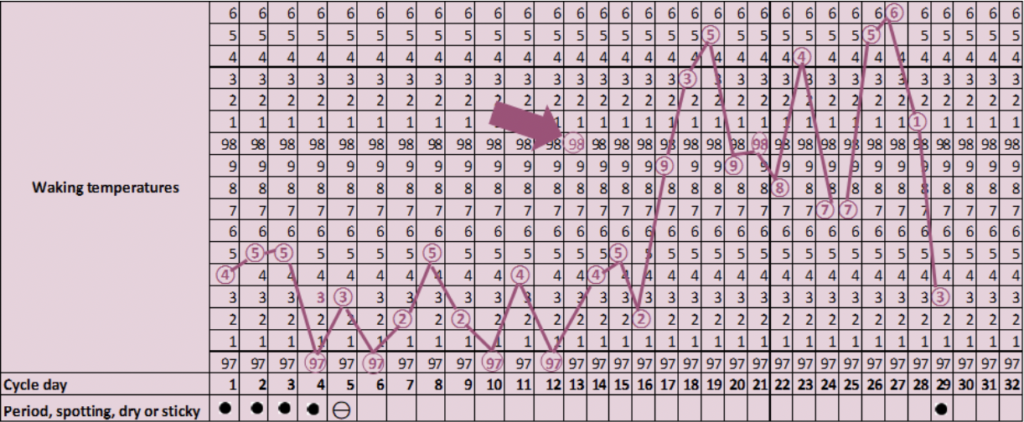
The 18 Months of Tracking That Taught Me My Body Was Not a Spreadsheet
I started tracking on a Monday. I am a data analyst. I track everything. My sleep. My steps. My calories. My mood. My productivity. My screen time. And when my husband and I decided to try for a baby, I started tracking my ovulation. Because fertility is just data, right? You track the inputs, you predict the outputs, you optimize the process. That is how data works. That is how I work.
I bought a basal body thermometer. I downloaded three apps. I bought ovulation test strips in bulk — 100 for $28 on Amazon. I started a spreadsheet. Date. Temperature. Cervical mucus consistency. Ovulation test result. Intercourse timing. Phase of moon. (I added the moon phase in month three, when I ran out of real variables to track.)
The first month, I was optimistic. I tracked perfectly. I temped at 6:00 AM every morning, before I moved, before I spoke, before I even opened my eyes fully. I peed on sticks. I checked my mucus. I entered the data. The app predicted ovulation on day 14. We had intercourse on day 12, 13, 14, and 15. I was sure it worked. I was sure I was pregnant.
I was not.
The second month, I was determined. I added more data. I tracked my cervical position. I tracked my mood. I tracked my appetite. I tracked my breast tenderness. I bought a fertility monitor — $150, digital, with Bluetooth connectivity. It synced with my app. It created charts. It generated predictions. It was beautiful. It was useless.
Month three, I started charting my luteinizing hormone levels. I tested twice a day. Morning and evening. I had 60 test strips. I used them all in 30 days. The app showed a peak on day 16. We had intercourse on day 15, 16, and 17. I was sure. I was hopeful. I was not pregnant.
Month four, I added progesterone testing. I bought a kit online. I tested my saliva. The results were ambiguous. I tested again. Still ambiguous. I called the company. They said, "Saliva testing is not as reliable as blood testing." I said, "Then why do you sell it?" They said, "Because people buy it." I threw it away.
Month six, I bought a wearable fertility tracker. $299. It measured my skin temperature, my heart rate variability, my sleep quality, and my respiratory rate. It predicted ovulation with "clinical-grade accuracy." It was wrong. Twice. It predicted ovulation on day 14. I ovulated on day 19. It predicted ovulation on day 16. I ovulated on day 11. The wearable was confused. I was devastated.
Month eight, I saw a reproductive endocrinologist. Dr. Chen in Boston. She looked at my charts — 47 pages of data, color-coded, with trend lines and annotations. She said, "You have excellent data." I said, "Thank you." She said, "But your cycles are irregular. You have PCOS. Your ovulation is unpredictable. And all this tracking is making you anxious, which is making your cycles more irregular." I said, "So what do I do?" She said, "Stop tracking."
I stared at her. "Stop tracking?"
"Stop," she said. "Stop temping. Stop testing. Stop charting. Stop tracking. Your body is not a spreadsheet. Your fertility is not a KPI. You are obsessing over data that is not helping you conceive. It is hurting you."
I went home and I cried. I cried because she was right. I cried because I had spent 18 months and $800 on fertility tracking devices and I was more confused than when I started. I cried because I had turned my body into a project and the project was failing. I cried because I wanted a baby and I did not know how to get one without data.
I stopped tracking. Not gradually. Cold turkey. I put the thermometer in a drawer. I deleted the apps. I gave the test strips to a friend. I stopped temping. I stopped testing. I stopped charting. And I started living.
I started sleeping in. I started eating breakfast without checking my temperature first. I started having sex when I wanted to, not when an app told me to. I started talking to my husband about things other than ovulation. I started going to yoga. I started reading books that were not about fertility. I started being a person again.
And in month 22 — four months after I stopped tracking — I got pregnant. I do not know when I ovulated. I do not know what my temperature was. I do not know what my cervical mucus looked like. I do not know the phase of the moon. I know that I had sex with my husband on a Sunday afternoon because we felt like it. And that was enough.
I am not anti-tracking. Tracking can be useful. Tracking can help you understand your body. Tracking can identify problems. Tracking can give you data to bring to your doctor. But tracking is not control. Data is not destiny. And your body is not a spreadsheet.
I kept the spreadsheet. It is in a folder on my computer. 47 pages. Color-coded. With trend lines. I look at it sometimes. Not because I miss it. Because it reminds me of who I was — a person who thought that if she collected enough data, she could control the outcome. And it reminds me of who I became — a person who learned that some things cannot be optimized. Some things cannot be predicted. Some things just happen. And the best thing you can do is let them.
— Megan, from Boston, where the data is optional and the babies come when they are ready.
