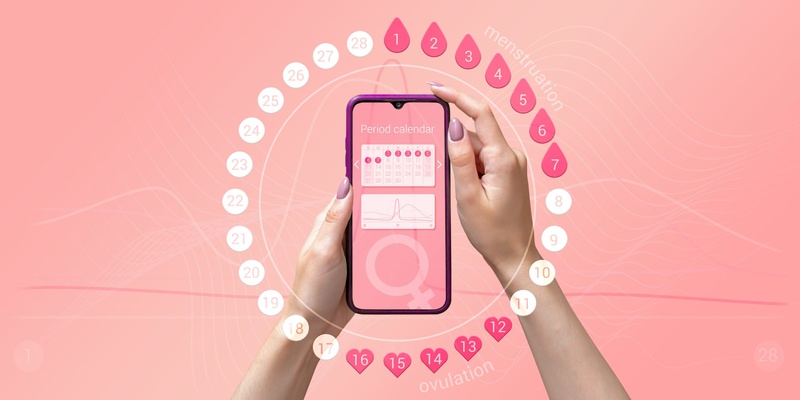
If I could go back to day one of tracking my ovulation, I'd tell myself five things. It would've saved me months of confusion, false alarms, and that one time I cried because my app said I was "late" when I actually just ovulated late.
1. Your Cycle Is Not 28 Days
I spent my first three months assuming I had a 28-day cycle because that's what health class taught me. My actual cycle is 31 days. My ovulation is day 17, not day 14. The "14-day rule" is a statistical average, not a biological law. I wasted so much anxiety on "late" periods that weren't late at all.
2. One Month of Data Means Nothing
Your first month of tracking is just baseline noise. You need at least three cycles to see a pattern, and six to be confident in it. I panicked when my second cycle was 34 days — turns out that was a one-time stress delay. By month six, I knew my normal range was 29-33 days.
3. BBT Confirms, It Doesn't Predict
I thought taking my temperature would tell me when I was about to ovulate. It doesn't. BBT rises AFTER ovulation. It's useful for confirming the egg released, but if you're trying to time conception, you need predictive signs — cervical mucus, OPKs, or just knowing your pattern from previous cycles.
4. Stress Shows Up Two Weeks Later
Not immediately. Not the next day. Stress affects your follicular phase, which means the delay shows up in your NEXT cycle, not the current one. I spent months trying to correlate same-day stress with same-day cycle changes. Wrong timeline. The body is slower than that.
5. An App Can't Know Your Body
I trusted my period app for eight months. It was wrong every single cycle. Apps use calendar algorithms based on population averages. Your body is not a population average. Track your actual signs — temp, mucus, symptoms — and trust that data over any algorithm.
The Real Lesson
Tracking isn't about perfection. It's about patterns. You're not trying to predict ovulation to the hour. You're trying to understand your body's general timeline so you can plan, prepare, and stop panicking when things shift.
My cycle still surprises me sometimes. Last month it was 27 days — shortest in a year. I have no idea why. Travel? Maybe. Diet change? Possibly. Random biological variation? Probably. The difference is, I don't panic anymore. I just log it and move on.