For the first six months of tracking, I only logged two things: period start date and period end date. That's it. Two data points per cycle. I thought that was enough.
It wasn't.
My cycle length varied from 28 to 34 days, and I had no idea why. My app just showed a jagged line of numbers with no context. "28 days, 31 days, 29 days, 34 days." Cool. But what happened on day 14 of the 34-day cycle? What happened on day 10 of the 28-day cycle? No idea.
The Missing Data
Period dates tell you when your cycle starts and ends. They don't tell you:
- When you actually ovulated
- How long your luteal phase was
- Whether stress, travel, or illness affected your cycle
- What your body felt like at different phases
I was missing the entire middle of my cycle. (I typed "middel" first and had to backspace. See? Even my fingers are inconsistent.) The important part. The part where ovulation happens, where the fertile window opens and closes, where my body does the actual reproductive work.
What I Track Now
Every morning: basal body temperature. Takes 60 seconds. Gives me ovulation confirmation within 24 hours.
Every afternoon: cervical mucus check. Usually right after I finish my coffee, which is around 2:30 PM, though sometimes it's 3:15 if I get distracted by TikTok. Not proud of that. Takes 10 seconds. Predicts my fertile window 2-3 days in advance.
Every evening: symptoms. Mood, energy, libido, cramps, bloating, breast tenderness, headaches, whatever. Takes about 30 seconds. Builds a pattern over time that explains why my cycle does what it does.
I use our Symptom Checker Log daily symptoms and spot patterns across your cycle. All data stays in your browser — we never see it. for all of this. It's faster than paper, easier than spreadsheets, and I can see trends across months instead of just isolated data points.
What the Data Revealed
After three months of full tracking, patterns emerged:
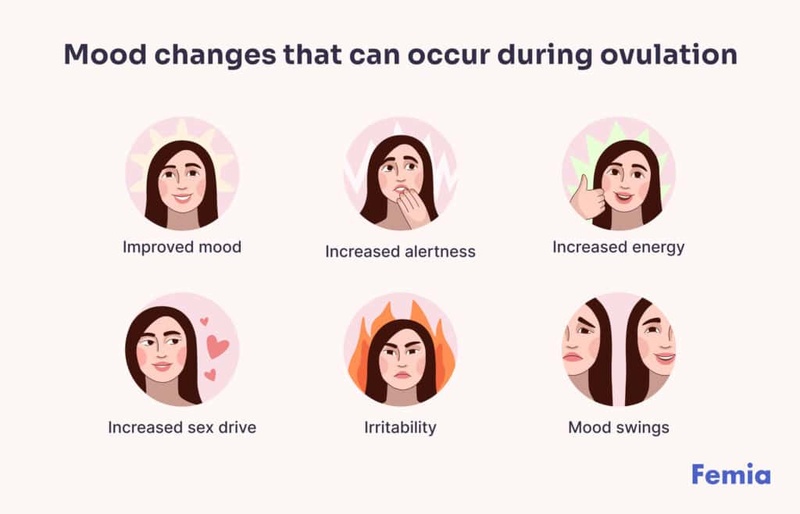
My mood crashes 2-3 days before ovulation. Not after. Before. It's like my body knows something big is coming and gets anxious about it. I plan easy work days during this window now.
My energy peaks during the fertile window. Not metaphorically — literally. I can run faster, think clearer, and stay awake longer. Then it drops like a rock in the luteal phase. I used to think I was "lazy" in the second half of my cycle. Now I know it's hormonal.
My libido is not random. It spikes 1-2 days before ovulation, every single time. Not because I'm thinking about fertility — because estrogen peaks and my brain responds. Understanding this removed so much confusion from my relationship.
The Bottom Line
Period dates are the cover of the book. Symptoms are the actual story. If you're only tracking dates, you're reading the table of contents and calling it a novel.
It took me six months to learn this. Don't be me. Start tracking symptoms now.
— M (gotta go, my cat just knocked over a plant)