The Morning I Realized My Period Was 11 Days Late and My App Said I Wasn't Fertile
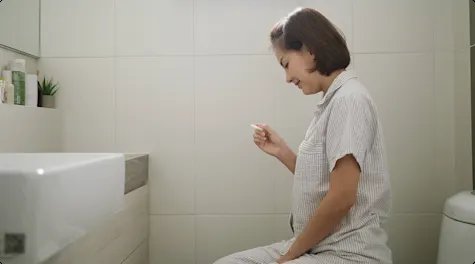
It was 6:47 AM on a Tuesday in March. I was standing in my bathroom in Boston, holding a pregnancy test in one hand and my phone in the other. The test had two lines. The app on my phone — the one I had been using for eight months to track my cycle — said I was in my "non-fertile phase." It had predicted my ovulation for day 14. It was now day 25. And I was pregnant.
I stared at the screen. Then the test. Then the screen again. The app had a 4.7-star rating. It had been downloaded 10 million times. It used "AI-powered algorithms" to predict fertility. And it had been wrong by 11 days.
I'm Megan. I'm a fertility awareness educator in Boston. I teach women how to track their cycles using basal body temperature, cervical mucus, and ovulation predictor kits. I do not recommend apps as primary birth control. But I also understand why women use them. They're convenient. They're free. They promise to take the guesswork out of fertility. And for millions of women, they work — until they don't.
My client Sarah — not her real name, but her real story — had been using the same app for two years. She was 34, in a stable relationship, and not ready for kids. The app told her she ovulated on day 14. Every month. Like clockwork. She planned her intimacy around it. She avoided the "fertile window" like it was a hurricane forecast. And for two years, it worked. No pregnancy. No scares. Just reliable, app-based birth control.
Then she got pregnant. On day 9. According to the app, she was "safe." According to her body, she had ovulated early. Possibly due to stress. Possibly due to travel. Possibly due to the fact that she had been sick with a cold and her immune system was fighting a virus, which can shift ovulation by days. The app didn't know any of this. It only knew her average cycle length and her last period date. It didn't know she was stressed. It didn't know she was traveling. It didn't know she was sick.
She called me crying. "I did everything right. I followed the app. I trusted the algorithm." I didn't tell her what I was thinking. I didn't say, "You trusted an algorithm with your reproductive future." I didn't say that because I understood. The app was easy. The app was free. The app felt scientific. And fertility awareness — real fertility awareness, the kind that involves taking your temperature every morning and checking your cervical mucus — feels like work. It feels like homework. It feels like something your grandmother did, not something a modern woman in Boston should have to do.
But here's the truth. The app was never designed to be birth control. It was designed to be a fertility tracker. A tool for women trying to conceive. The "avoid pregnancy" mode was an afterthought. A feature added because users asked for it. And the algorithm — the "AI-powered" algorithm — was just a calendar method with a fancy interface. It assumed every woman ovulates on day 14. It assumed every cycle is 28 days. It assumed consistency, regularity, and predictability. And women's bodies are none of those things.
I teach the sympto-thermal method. It's not an app. It's a practice. You take your basal body temperature every morning before you get out of bed. You chart it. You observe your cervical mucus. You note the changes. You learn your body's unique patterns. And you use that knowledge — real, embodied knowledge — to identify your fertile window. Not an algorithm's guess. Your body's signal.
It takes three months to learn. It takes discipline. It takes a thermometer and a notebook or a dedicated app that actually tracks symptoms, not just dates. But it works. When used correctly, the sympto-thermal method has a 99.4% effectiveness rate. That's better than the pill. That's better than condoms. That's as good as an IUD. And it has no side effects. No hormones. No devices. No prescriptions.
Sarah chose to continue the pregnancy. She's due in November. She's happy now — scared, but happy. And she tells everyone she meets: "Don't trust the app. Learn your body." I wish she hadn't had to learn that lesson the hard way. But I'm grateful she's sharing it.
If you're using a fertility app for birth control, please hear this. The app is a tool. It is not a guarantee. It does not know your body. It only knows what you tell it, and even then, it makes assumptions. If you want reliable, natural birth control, learn fertility awareness. Take a class. Read a book. Track your symptoms. It takes effort. But your reproductive future is worth the effort.
— Megan, from a classroom in Boston where the thermometers are digital and the knowledge is ancient
